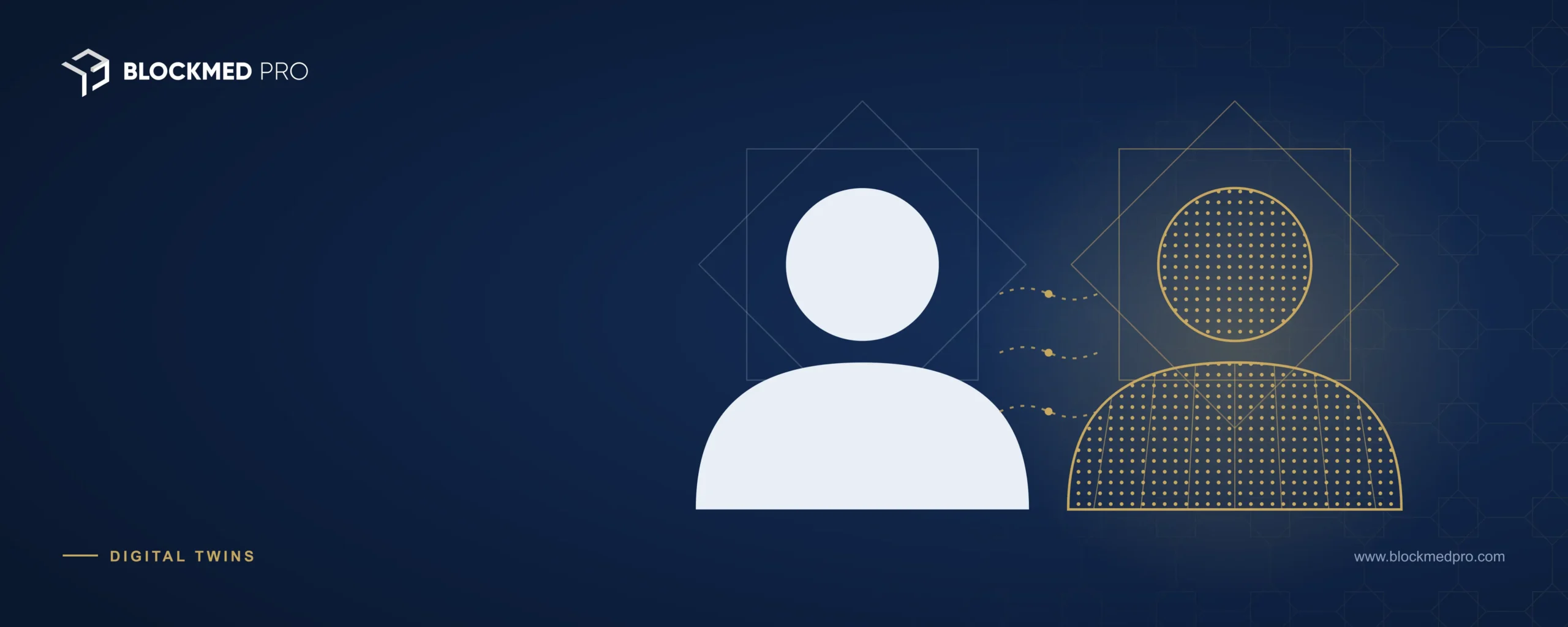
Digital twins have become one of those phrases that gets used far ahead of what most people actually mean by it. The idea started in engineering. You build a live digital model of a physical thing, a jet engine or a factory line, feed it real data, and use it to predict how the real thing will behave. Applied to healthcare, the promise is obvious and enormous. A working model of a person that helps anticipate how they will respond to a treatment before it is given. As a clinician, I find that idea genuinely exciting. I also think it is worth being honest about where we are and where we are not.
What a Health Digital Twin Actually Is
At its simplest, a health digital twin is a data-driven model of an individual, kept current with information from their record and, increasingly, from devices they wear. It is not a science-fiction replica of a person. It is a structured representation of the measurable parts of someone’s health, used to reason about likely outcomes.
The value is in the questions it lets you ask. How is this person’s condition likely to progress over the next year. Which of two treatments is more likely to suit them given their history. Where should a stretched service focus attention first. These are questions clinicians already try to answer using experience and averages. A well-built twin lets you ask them with the individual’s own data rather than a population average.
Where Digital Twins in Healthcare Outrun the Evidence
I want to be careful here, because health is a field where confident claims can do real harm. A model is only as good as the data feeding it and the assumptions built into it. If the underlying record is incomplete, and most records still are, the twin inherits those gaps. If the model was trained on populations that do not look like the patient in front of you, its predictions may quietly mislead.
So I treat digital twins as decision support, not decision makers. They can sharpen a clinician’s judgement. They should not replace it. Anyone promising an autonomous model that manages a patient without a clinician in the loop is, in my view, selling something the evidence does not yet support. The right posture is curiosity paired with caution.
Why Patient-Held Records Matter for Digital Twins
Here is the part that gets discussed least and matters most. A digital twin is only as complete as the data it can lawfully and practically draw on. Today that data is scattered across systems that do not talk to each other, and access is arranged institution by institution rather than by the person the data describes.
This is why I keep coming back to patient-owned data. A coherent patient-held record, with clearer permissions where consent is appropriate, could reduce the need to negotiate access across numerous custodians when building a twin. Meaningful patient choice and appropriate governance become central to how the model is used. That is the logic behind our One True Record, and it is why I see the twin and the patient-held record as two halves of the same idea rather than separate products.
It also changes who benefits. When access flows through the patient, research can reach real, consented, well-described data without stripping people of control, and patients can see and decide how their information contributes. Our marketplace is built around that principle of consent-driven access rather than quiet data trading.
What the Future of Digital Twins in Healthcare Could Look Like
I expect the near-term wins to be unglamorous and useful. Better prediction of who is at risk of deterioration. More personalised choices between existing treatments. Fewer wasted appointments because the right information reached the right clinician at the right time. The dramatic uses, twins that simulate complex interventions in advance, will come, but they will come after we have fixed the plumbing, not before.
That plumbing is the boring, essential work. Complete records. Clear consent. Robust information governance. Models that are validated honestly and describe their own uncertainty. None of it makes a good headline. All of it is what turns a compelling idea into something a clinician can actually trust at the bedside.
I did not train as a clinician to be impressed by technology for its own sake. I am interested in what helps the person in front of me. Digital twins, built on data that patients can access and have greater control over, could be one of the most useful tools we have seen in a generation. Getting there depends less on the cleverness of the model and more on whether we are willing to put patients at the centre of their own data first. That is the work we are focused on, and you can learn more about our approach at BlockMed Pro.