A patient came to see me recently wearing a watch that knew more about his heart rhythm than his medical record did. It had months of continuous data, flagged episodes, sleep patterns and exercise tolerance. My clinical system had a blood pressure reading from February and a discharge letter that took three weeks to arrive.
This is the strange position modern medicine finds itself in. We have never collected more health data, and we have rarely been worse at assembling it into a picture of one person.
Why Health Data Still Sits in Separate Systems
Consider what actually exists for a typical patient in the UK today. A GP record holding decades of consultations, diagnoses, prescriptions and results. Hospital records scattered across every trust they have ever attended. A pharmacy dispensing history. Dental records. Optical records. And now a rapidly growing personal layer – wearables tracking heart rate and sleep, glucose monitors, home blood pressure cuffs, fitness apps, symptom diaries.
Each of these is a genuine signal. Too often, these sources do not communicate with one another. Healthcare data interoperability has been promised for as long as I have been a doctor, and the honest assessment is that we have connected institutions to institutions while leaving the patient’s own picture in fragments.
The Clinical Cost of Fragmented Health Records
The clinical cost of fragmentation is not abstract. Medication safety can be compromised when one prescriber cannot see another’s changes. Deterioration gets missed because the early signal sat in a device nobody looked at. Patients repeat their history at every encounter, and the version they remember under stress is rarely the version in the notes. Every clinician reading this has worked around these gaps so routinely that we have stopped noticing them.
Why the Patient Should Be the Point of Integration
The conventional answer has been ever-larger integration programmes, connecting system A to system B, one interface at a time. These matter and I support them. But they share a structural limitation – they organise data around institutions, and patients do not live their lives inside institutions. The person is the only entity present at every single healthcare encounter they will ever have. Which suggests an obvious question. Why is the person not the point of integration?
That is the premise behind One True Record, and behind the broader movement toward patient-owned health data. Instead of asking every institution to connect to every other institution, you give the patient a single, verified record that travels with them, assembled from every source they choose to connect, from their GP record to the sensor on their wrist. The institutions would not necessarily need direct connections to every other institution. They each need to know about one thing – the patient.
What a More Complete Patient Record Could Make Possible
When the picture is more complete, it may support insights that fragmented data cannot readily provide.
Prevention gets sharper. A slow drift in resting heart rate, weight and sleep quality means little in isolation, and a great deal alongside a family history and a medication list. The signal was always there. It was just split across systems that never met.
Consultations get better. When a patient can show me a verified, complete record rather than recalling fragments, we spend the appointment on medicine rather than archaeology. In a ten-minute consultation, that is not a marginal gain.
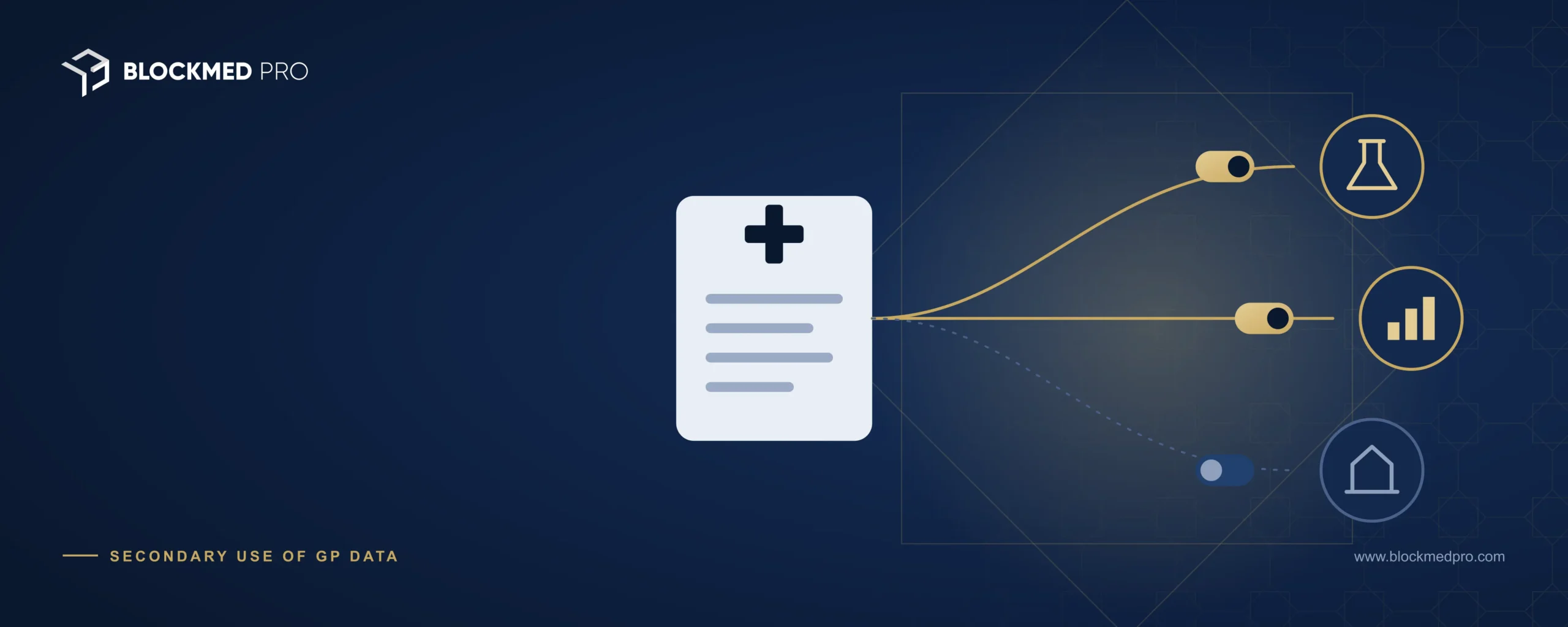
Research could benefit, too. Real-world evidence built only on clinical records sees the patient a handful of times a year. Add consented wearable and lifestyle data and you see the life lived between appointments, which is where most health is actually made and lost. A real-world evidence platform built on complete, consented patient pictures is a different scientific instrument from one built on institutional extracts. The completeness must always be the patient’s choice, source by source, but for those who opt in, the contribution to medical knowledge is of a different order.
Why Trust and Patient Choice Still Matter
None of this works without trust, which is why ownership is not a slogan but an architecture. The aim is for patients to have clearer choices about what is connected, visibility over what is shared, and the ability to change permissions where applicable. Get that right and people may feel more confident about connecting their information. You can read more about what BlockMed Pro is building and the approach behind it.
The technology to assemble the complete patient picture now exists. The data already exists. What has been missing is the organising principle, and it was in front of us the whole time. The patient is the platform.