I am asked this question in clinic more often than any other question about data. Not “is my record safe”, but “who is looking at it”. The honest answer is longer than most patients expect, and the part that surprises them is how little of the decision sits with them.
Here is the picture as it stands in England today.
Who Can Access Your NHS GP Record Today?
Your GP practice holds your record and is its data controller. The clinicians and staff who treat you can see it, and that is as it should be. Beyond the practice, the Summary Care Record makes a slice of it available to other NHS services, such as A&E or an out-of-hours GP. Shared care records run by Integrated Care Boards extend that further across hospitals, community teams and social care in your area.
Then there is secondary use. GP data may be used for planning and research under specific safeguards. The National Data Opt-out and Type 1 opt-out apply to different kinds of data sharing; a Type 1 opt-out can prevent certain identifiable GP data from being shared identifiable data for anything other than your direct care. Most patients have never heard of either. The ones who have usually found out through a news story rather than a conversation.
These arrangements are described in NHS information and privacy notices, although the rules and safeguards differ by use. But notice the shape of it. Access is decided by institutions, published in privacy notices, and offered to patients as something to object to rather than something to agree to. Consent, in the everyday sense of the word, is rarely the mechanism.
Why Patients Need Clearer Visibility and Control
I do not think the NHS is careless with data. I think it is operating a model designed for a paper age, where sharing was slow and expensive, so a presumption of access made sense. Digital sharing is instant and cheap. The old presumption now does a great deal of work it was never designed for.
Three problems follow.
First, trust erodes quietly. When people discover a data flow they did not know about, they do not tend to object loudly. They tend to withhold. Patients tell me less, or they opt out of everything, including the research that might help them.
Second, the opt-out is a blunt instrument. It can feel like a broad choice rather than a way to express detailed preferences. A patient who is happy for a cancer charity to study her records but not a marketing firm has no way of saying so.
Third, nobody can show the trail. If you ask your practice today for a complete list of who has accessed your record and why, the answer will be partial. The audit exists in pieces across systems that do not talk to each other.
What Meaningful Patient Control Could Look Like
Patients should be the decision point, not an exception to it. In practice that means four things.
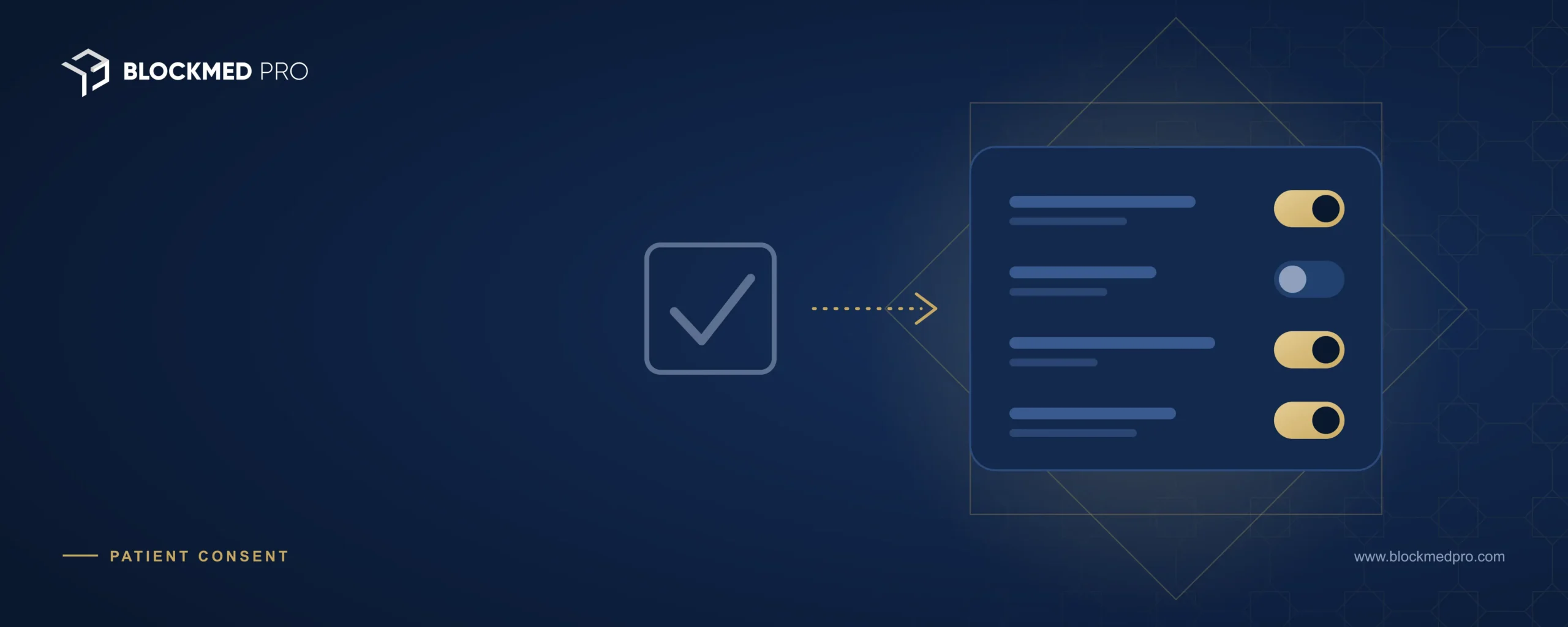
Consent should be specific. Yes to this study, for this period, for this purpose. Not a tick box in a privacy notice written for lawyers.
Consent should be revocable. If you change your mind, access should stop, and you should be able to see that it stopped.
Every access should leave a trail the patient can read. Not a log an administrator can pull on request, but a record you can open on your phone.
And where your data creates value, you should share in it. The NHS, researchers and industry already benefit from GP data. The person the data describes is the only party in the chain who does not.
This is the thinking behind myOTR, the One True Record we have built at BlockMed Pro. The aim is to put the patient closer to decisions about access and permissions, and to make each consent is recorded so that it can be verified later. We are live with NHS GP practices, we are Cyber Essentials Plus certified and assured against NHS England’s DTAC, and we are working towards ISO 27001. You can read what those mean on our compliance page (www.blockmedpro.com/products/compliance). I mention them not as badges but because a consent model is only as credible as the security underneath it.
How to Check Who Can Access Your GP Record
Ask your GP practice whether you have a Type 1 opt-out and whether you have set the National Data Opt-out. Ask what shared care record your area runs and who can see it. Ask for the privacy notice and read the section on secondary uses. You may be entirely comfortable with the answers. The point is that you should know them.
The question “who can see my record” should have a short answer: the people I have agreed to. We are not there yet. The technology to get there exists. What is missing is the decision to hand the decision back.
If you have questions about how consent works in myOTR, our FAQs cover the common ones, and I read every message that comes through the contact page.
Related reading: Getting Consent Right on the Secondary Use of GP Data